
Disclosure: I’m a Flodesk Partner. This post includes my affiliate link. If you sign up through it, I may earn a commission at no extra cost to you.
You’ve planned the newsletter, written something thoughtful, checked the links and pressed send. Then the open rate comes in and you start wondering: Why is nobody opening my emails? Are they all in spam? Did I write a boring subject line? Should I just give up and post it on Instagram instead?
First, take a breath. A quiet email doesn’t automatically mean your subscribers don’t care. Your email may have landed in spam, your list may include people who haven’t engaged in a long time, or your audience may simply be busy. The tricky part is working out which one it is.
I work with therapists on their marketing, including the emails that help people stay connected to a practice between finding the website and deciding whether to get in touch. Flodesk is one of the tools I use for that work. Its new Flodesk Deliverability Center brings several checks and actions together, so you have somewhere practical to start when you’re asking, “How do I keep my emails out of spam?”
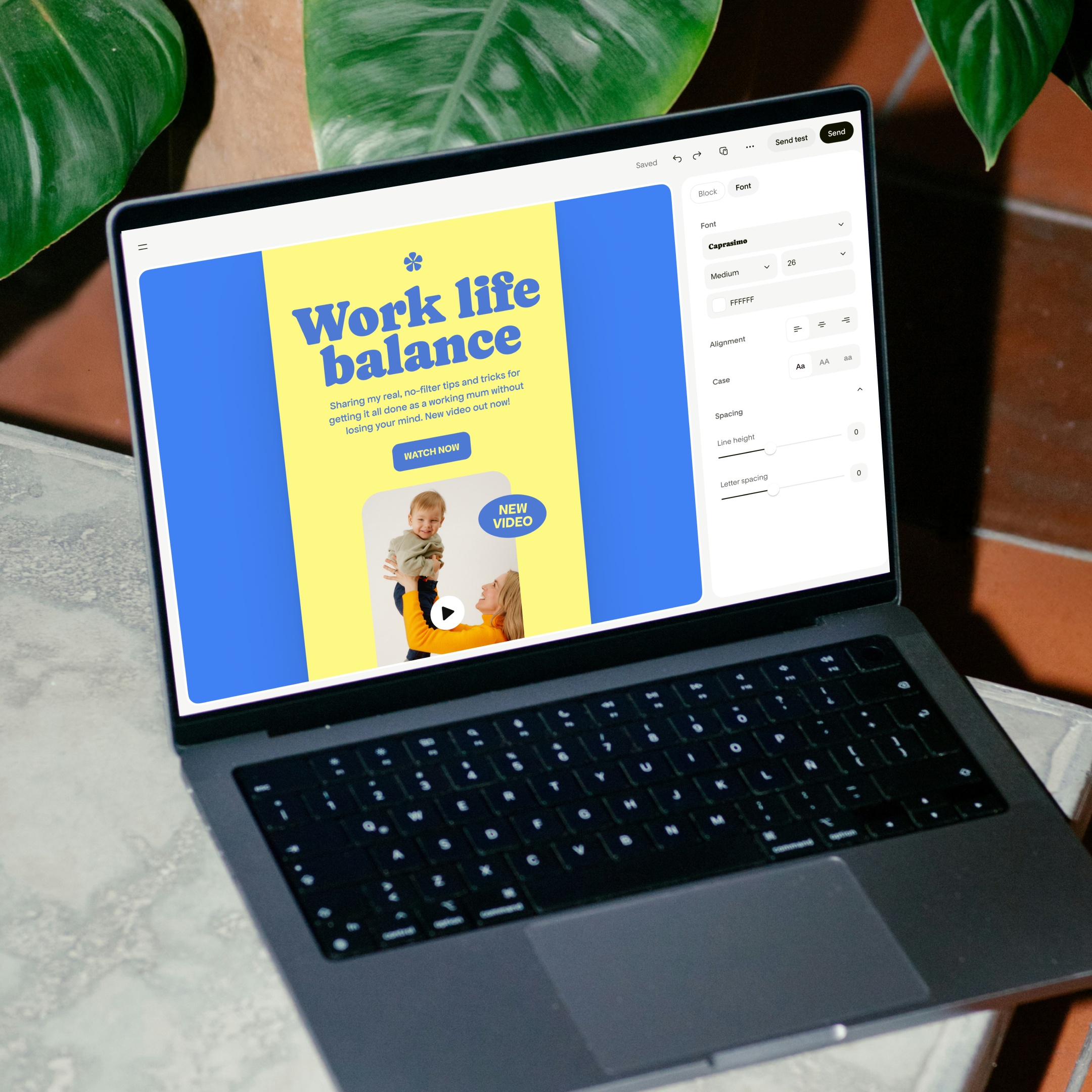
A laptop on a table beside leafy plants displays an email design workspace. The preview shows a bright yellow and blue newsletter promoting work-life balance tips, alongside editing controls for fonts, alignment and spacing.
Why is nobody opening my emails?
Sometimes the answer is that your email didn’t reach the inbox. Email delivery means it made it to the recipient’s mail server. Deliverability is about where it landed: the inbox, spam or another folder. That distinction matters because a “sent” email does not necessarily mean someone had a chance to read it. Flodesk explains the difference between delivery and deliverability here.
Inbox providers look at several signals, including whether your sending domain is authenticated, whether your setup meets their requirements, and how subscribers respond. If a large proportion of your list has stopped engaging, it’s worth looking at the health of the list as well as the email itself.
There’s another small catch: open rates are not a perfect measure. Privacy features can affect whether opens are recorded accurately, so I wouldn’t use that number on its own to decide whether your email marketing is working. Look at the wider pattern, including clicks, replies, enquiries and bookings, too.
What is the Flodesk Deliverability Center?
The Flodesk Deliverability Center is a section in your Flodesk account that brings together domain authentication, a compliance checklist, audience health, list cleaning and list warming. It gives you more context about what might need attention and points you towards next steps. Domain authentication itself was already available in Flodesk; the Deliverability Center puts its status alongside the other checks.
Here’s how I’d work through it when reviewing email marketing for a therapy practice.
Is my sending domain authenticated?
Start with the sending address your subscribers see. A custom email address using your practice’s domain looks more recognisable than a free Gmail or Outlook address and lets inbox providers check that the email really came from you.
The domain authentication section checks SPF, DKIM and DMARC. Those records help prove to inbox providers that you are who you say you are and that Flodesk is allowed to send on your behalf. If something needs attention, the Center shows what Flodesk expected to find and what it found instead. You’ll still need to make any DNS changes through your domain host, but having the information and next step in one place makes the job feel less like deciphering a mysterious tech scroll.
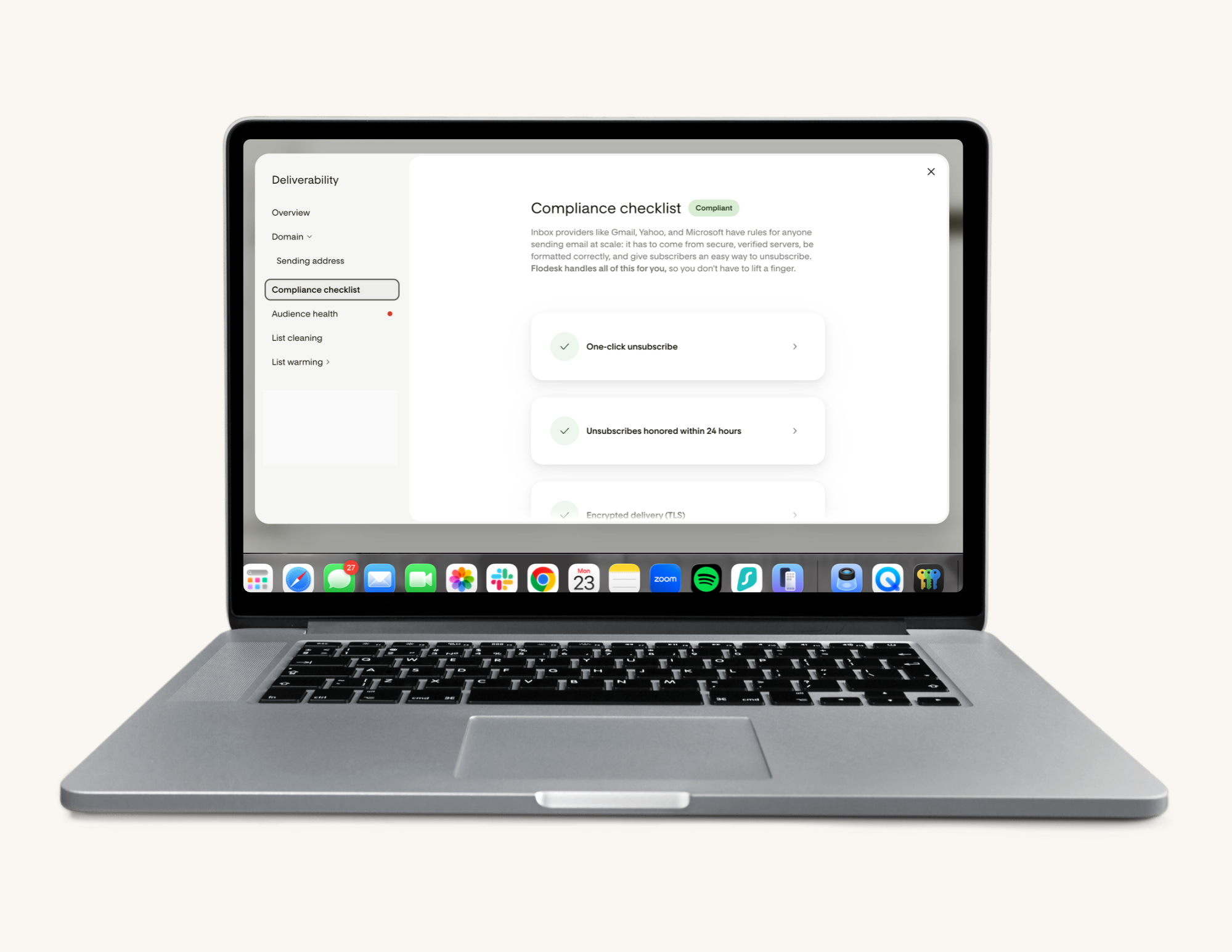
The Flodesk Deliverability Center’s compliance checklist is marked compliant. Visible checks include one-click unsubscribe and unsubscribes being honored within 24 hours.
What does the compliance checklist cover?
This section shows the technical requirements Flodesk already handles, such as one-click unsubscribe and encrypted email delivery. It’s useful to know what is taken care of behind the scenes, while remembering that you’re still responsible for sending to people who chose to hear from you and for making your emails clear and relevant.
How healthy is my email audience?
Audience health groups subscribers according to their recent engagement. You can see who is healthy, drifting, at risk or unengaged, then view those contacts in your audience.
For a therapist, that’s helpful when you’ve been emailing inconsistently or have built a list over several years. Someone who downloaded a guide a long time ago may no longer remember signing up. Reviewing your audience gives you a chance to make sure your regular newsletter is reaching people who are still likely to want it.
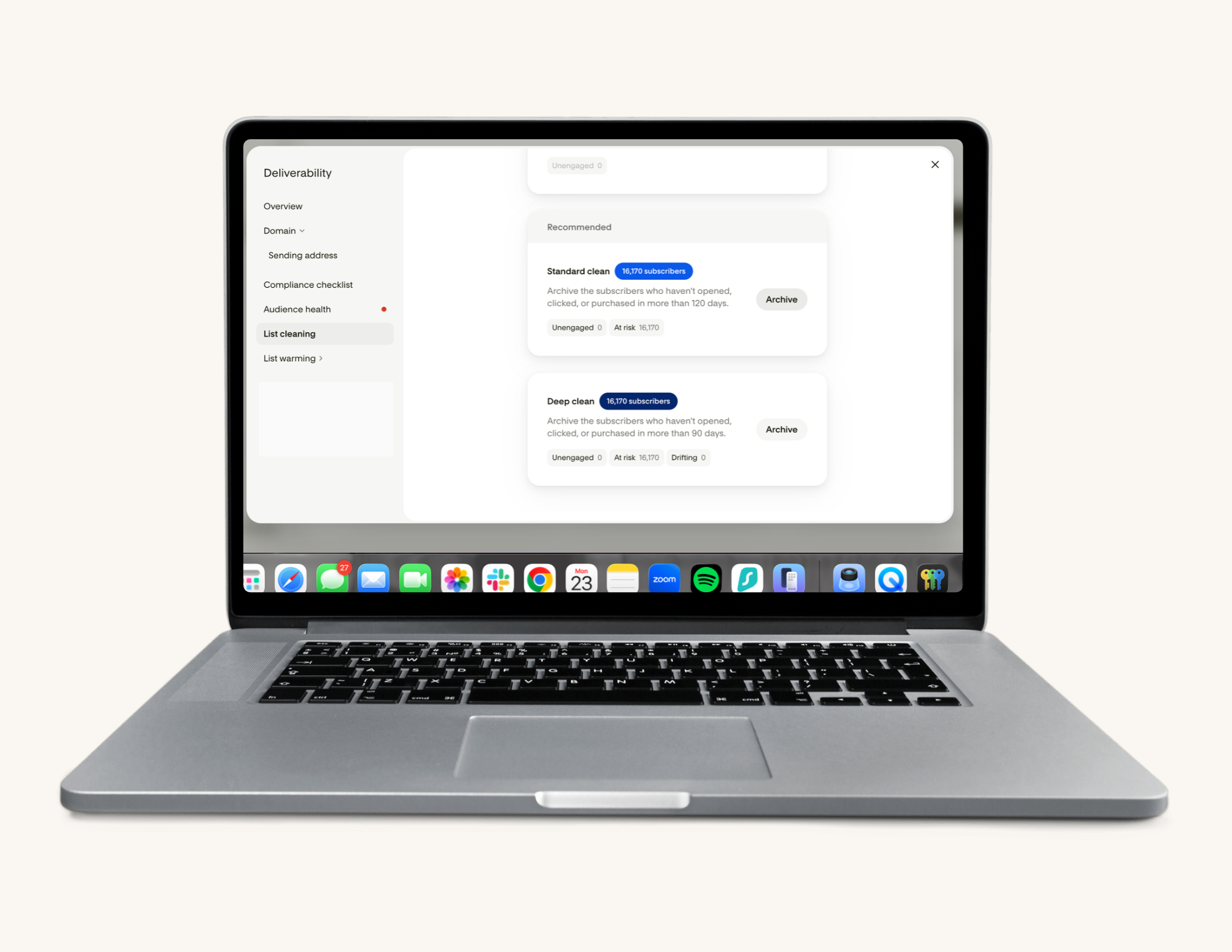
The Flodesk Deliverability Center’s list cleaning screen shows three ways to archive subscribers who haven’t engaged: light scrub, standard clean and deep clean. The standard clean is marked as recommended.
How often should I clean my email list?
A good time to review your list is whenever you notice a lot of long-term disengagement, you’re preparing to send after a long break, or your engagement has been slipping. Cleaning your list moves unengaged subscribers out of your active list so you can focus regular emails on people who are more likely to read them.
Flodesk offers three cleaning levels: light scrub, standard clean and deep clean. The Center shows how many subscribers each level would archive before you choose. Archived subscribers stop receiving your emails, but they aren’t deleted from your account, and you can undo the action by unarchiving them.
You don’t have to choose the deepest clean just because it sounds thorough. Look at what each level includes and decide what suits your list. I also wouldn’t promise that cleaning your list will produce a particular open-rate jump. The point is to stop regularly sending to people who have been disengaged for a long time and give your active audience a better chance of seeing your emails.
When should I warm up an email list?
Warm up your list if you’ve moved to a new email platform, changed your sending setup, taken a long break from emailing or noticed that your messages are landing in spam. The idea is to start by emailing your most engaged subscribers, then gradually reach larger groups.
The Flodesk Deliverability Center guides you through cleaning your list, creating warming segments, writing an email and choosing a sending cadence. The segments start at 50 subscribers and grow from there. Flodesk helps create the segments and schedule; you write and send the emails yourself. A warm-up email should give people a real reason to open it, such as a useful resource or a short note about what they can expect from your newsletter.
For therapists, “useful” doesn’t need to mean a mini lecture or a big promotion. It could be a grounding exercise, a reflection prompt, a new blog post, an update about a group or a gentle reminder of how someone can enquire about working with you.
What else helps keep therapist emails out of spam?
A few steady habits can make email feel more manageable and help your subscribers know what to expect:
Email people who opted in. Don’t add therapy clients, referral contacts or old enquiry lists to a newsletter unless they specifically consented to receive it.
Send consistently at a pace you can maintain. A monthly email you can keep up with is more realistic than a weekly plan that disappears after three sends.
Make the subject line match the email. Clear and specific usually beats clever-but-mysterious.
Give people something they signed up for. Keep your newsletter connected to the reason they joined your list.
Make unsubscribing easy. People should be able to leave without having to hunt for a tiny link or email you personally.
Pay attention to more than opens. Look at clicks, replies and the real-world actions your emails are meant to support.
If you’ve been putting off email because you’re worried you’ll annoy people, remember that a respectful newsletter gives subscribers a choice. They can read, ignore or unsubscribe. Your job is to send something relevant, make it clear who it’s from and let people decide.
Is Flodesk a good fit for therapist email marketing?
In my work with therapist brands, the practical question is whether a tool helps you create emails that feel like your practice and makes it easier to keep showing up. Flodesk combines email design with audience segments and workflows, so it can support things like welcome emails for new subscribers, a regular newsletter or follow-ups after someone downloads a resource.
I’ve also written about using Flodesk to create on-brand emails for therapists. If you’d like support with the planning, writing or setup side, email marketing is one of the ways VA For Therapists can support your practice. We can help you make a plan that fits your capacity, rather than adding another weekly task to the list.
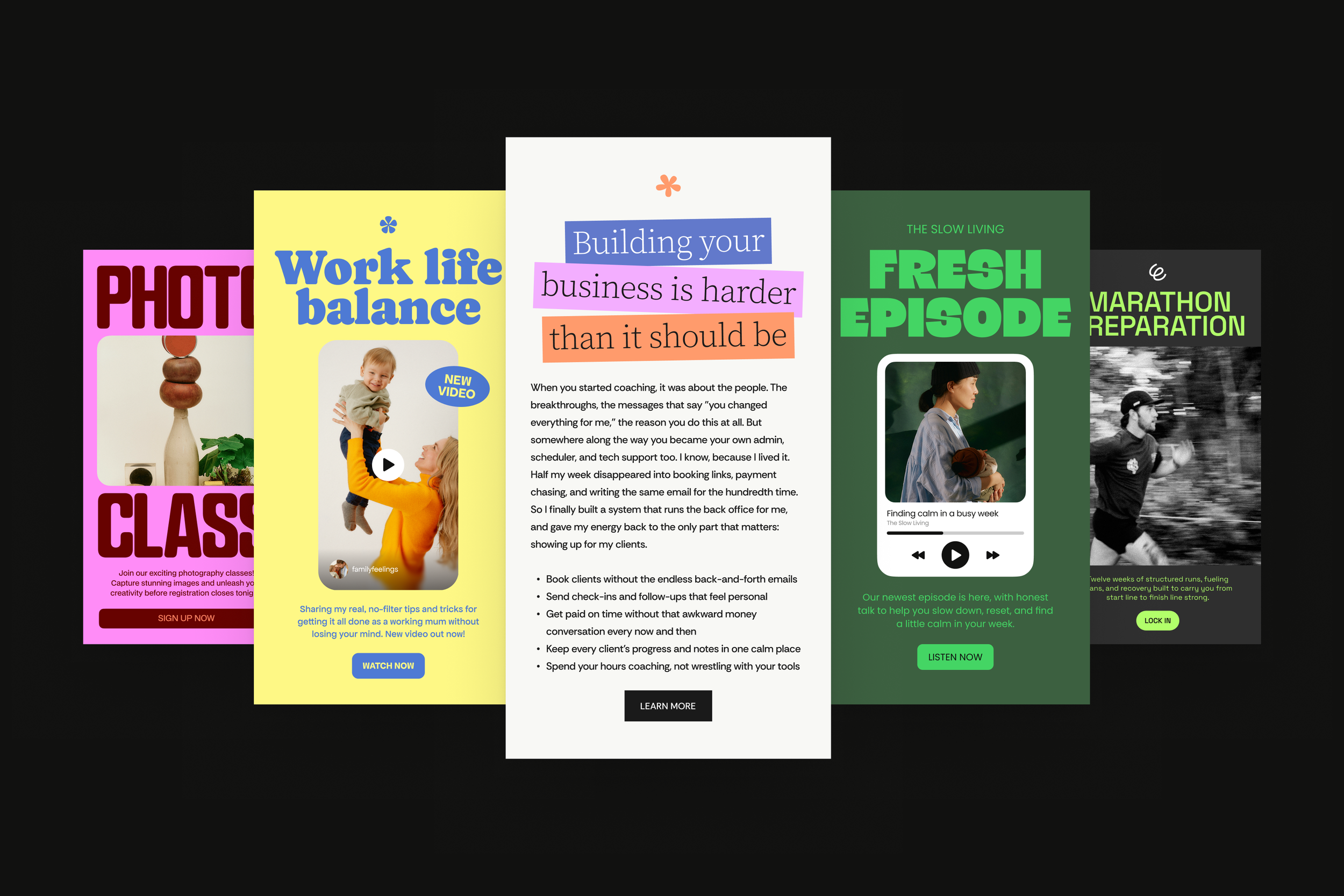
A collage of colourful email designs, including a photography class promotion, a work-life balance video, a business support email, a podcast announcement and a marathon training promotion. The examples show how email layouts can look varied and on-brand.
What should therapists know about Flodesk’s unlimited plans?
Flodesk’s unlimited plans are back for a limited time. You can check the current offer and terms through my Flodesk partner link, and use code VAFORTHERAPISTS.
What’s one email habit I can try this week?
Open the Flodesk Deliverability Center and review your domain authentication and audience health. If your account flags something, follow the next step shown there. If you’ve been quiet for a while, make a plan to warm up your list before sending to everyone at once. And if you’re not sure which cleaning level fits, take a moment to review the number of subscribers each option would archive before choosing.
Email marketing doesn’t need to be another thing you do perfectly. A clear sender address, a list of people who chose to hear from you and a steady rhythm of useful emails are a sensible place to begin.
I’m a Flodesk Partner, and the link in this post is an affiliate link. If you sign up through it, I may earn a commission at no extra cost to you.
